Written by Onthatile Morulane
Digital inequality in South African higher education, presented at the SAAPAM Silver Jubilee
Picture two first-year students on the same Monday morning, enrolled at the same university, logged in to the same learning management system.
The first opens a laptop in a residence with steady Wi-Fi. Lecture recordings load, the discussion forum lights up, and the library’s digital archive is a click away at any hour.
The second sits on a hillside in a deep rural village, holding a single smartphone and watching a data balance shrink with every page. The signal comes and goes. The reading list is waiting but the repository that holds it might as well be on another continent.
Same course, same deadline, same promise of education. Very different Mondays.
This is the reality at the centre of a paper presented by Manamela MG at the 25th Annual SAAPAM Conference. The conference runs from 27 September to 3 October 2026 at the Inkosi Albert Luthuli International Convention Centre in Durban, under the theme “Growth and Sustainability through Improved Governance: Reimagining Institutions, Leadership and Development in a Changing World”.
The paper, Digital Inequality in SA Higher Institutions of Learning: Reference to E-Learning versus E-Repositories, turns that theme into a practical question. Can institutions be reimagined if the students inside them are not equally able to reach them?
The paper begins with a familiar history. The rise of fourth industrial revolution technologies was already nudging universities towards e-learning. Then the Covid-19 lockdown removed the choice. Institutions had to adopt digital tools at speed, and many did so without asking who might be left behind.
The presentation does not dispute that learning management systems arrived. Its concern is whether online teaching and learning is effective for everyone it is meant to serve.
The paper’s most distinctive contribution is its attention to electronic repositories. These are the digital storage systems that preserve and share academic material and they receive far less attention than the platforms that deliver lectures.
At their best, they give students round-the-clock access to learning materials and discussion forums, and they open scholarly resources to students living with physical disabilities. They are the difference between a student who participates and one who merely enrolls.
The paper defines digital inequality plainly: unequal access to the smartphones, computers and internet on which modern learning depends. It describes a gap between the “haves” and the “have-nots”.
The study is conceptual. It draws on a scoping literature review and a desktop analysis of research on e-learning, digital exclusion and access to technology in South Africa.
The pattern it finds is consistent. A blanket approach to online learning affected students unevenly. Those in remote rural areas faced the greatest barriers: limited access to repositories, unreliable networks, and too little money for data. For them, performance and the quality of their education were compromised.
This is where the paper meets the conference theme most directly. Online systems, it argues, were introduced without fully considering whether every student could reach and take part in them. That is a question about how institutions are designed and led, and about whether they are accountable to the people they serve.
The paper notes that some private-sector players, including banks and universities, have begun providing data to students. It also observes that data alone does not help a student who has no device.
Its central recommendation is aimed at policy. It calls on the national Department of Higher Education and Training to prioritise access to digital resources and repositories in under-served areas, so that online teaching and learning does not widen the divides it was meant to bridge.
Twenty-five years on, SAAPAM’s Silver Jubilee asks how public institutions can be reimagined to deliver growth that lasts. This presentation offers one clear test: a reimagined university is one where the student on the hillside and the student in residence share the same Monday morning.
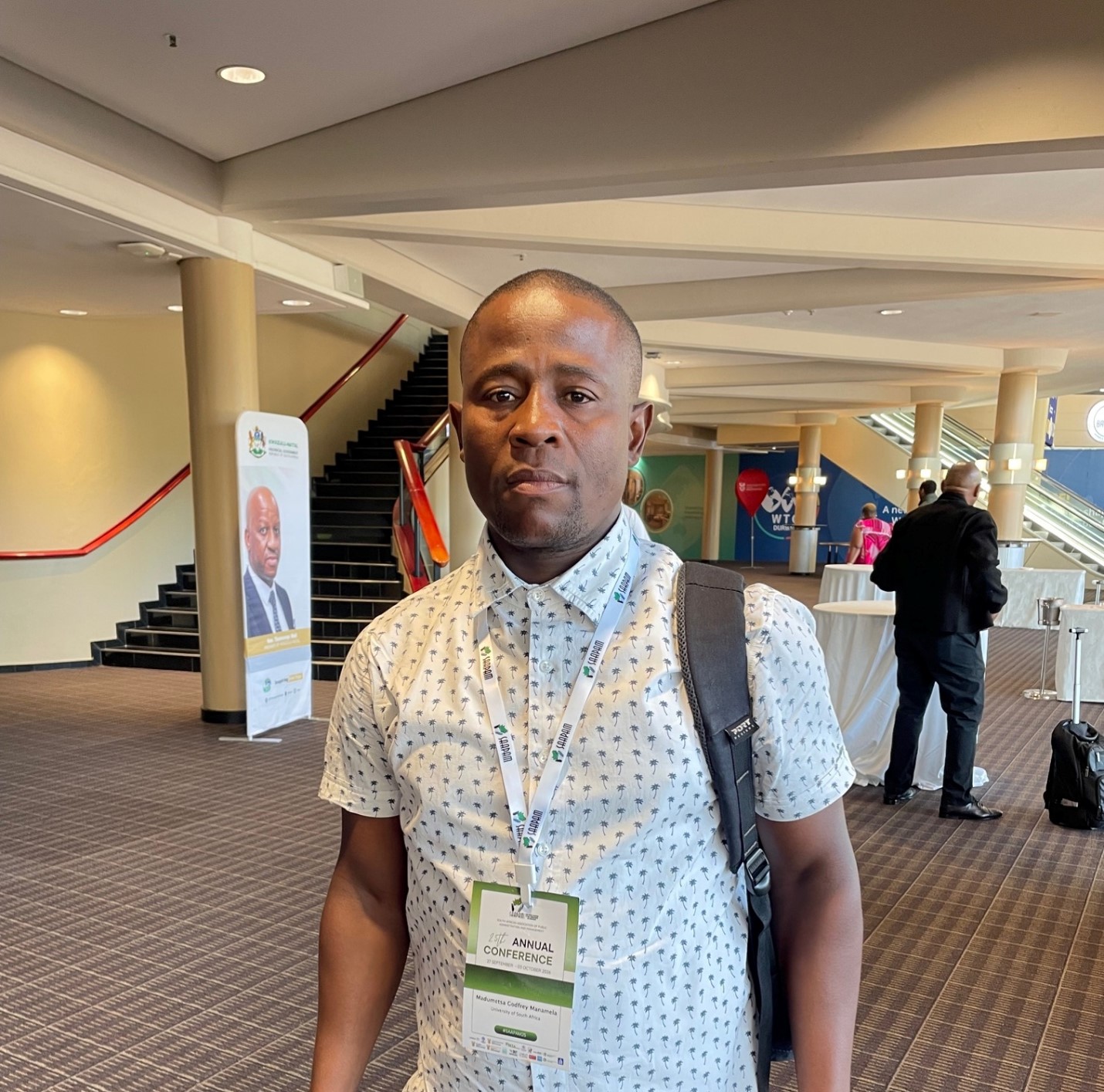
Manamela MG presented this paper at the 25th Annual SAAPAM Conference, ICC Durban.
How can we help you?